Many English learners get confused between “who” and “whom.” They look similar, but they are used in different ways. This small grammar rule often creates big doubt in writing, speaking, emails, and exams.
People search this keyword because they want a quick and clear answer without complicated grammar rules.The confusion happens because modern English is changing.
|See more Further vs Farther
Many native speakers even avoid “whom” in daily speech. Still, it is important in formal writing, exams, and professional communication. If you use it wrong, your sentence may sound incorrect or less polished.
In this guide, you will learn the simple difference between who vs whom, their origin, usage rules, common mistakes, and real-life examples.
You will also see easy comparisons, tables, and FAQs to help you remember forever. By the end, you will never feel confused again about when to use “who” or “whom.”
Who vs Whom – Quick Answer
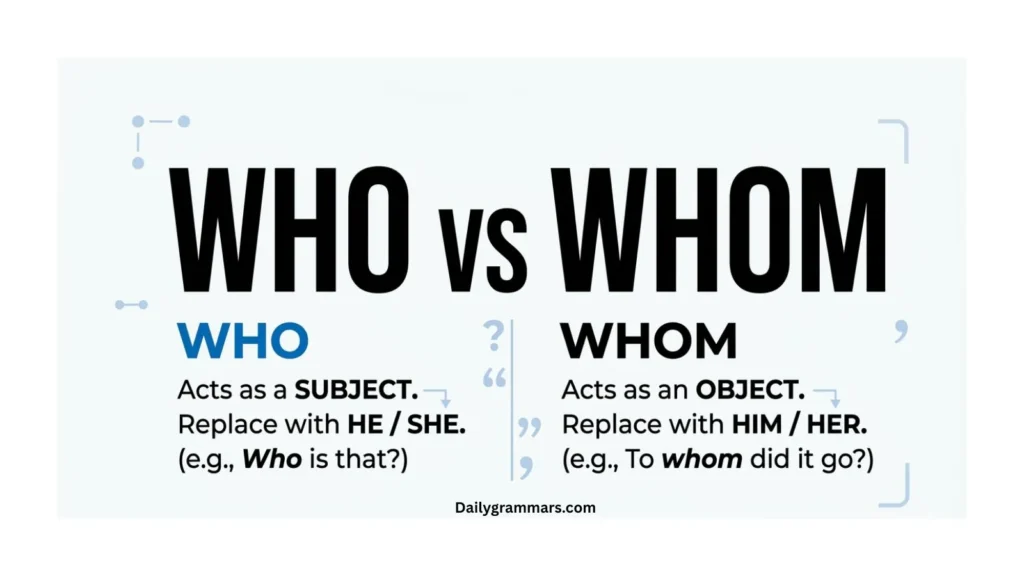
“Who” is used as the subject of a sentence.
“Whom” is used as the object of a verb or preposition.
Examples:
- Who called you? (subject = who)
- Whom did you call? (object = whom)
- To whom are you speaking? (after preposition)
Simple trick: Use who if you may substitute he she for it. If you can replace it with him/her, use whom.
The Origin of Who vs Whom
The words who and whom come from Old English.
- Who comes from “hwa” meaning what person
- Whom comes from the object form of “who,” used in Old English grammar
In older English, grammar had more cases (like Latin). Words changed form depending on their role in the sentence. Over time, English became simpler, but “whom” stayed in formal writing. Today, “whom” is slowly disappearing in casual speech but still used in academic and professional English.
British English vs American English Usage
Both British and American English use the same grammar rule, but usage style is different.
- American English: Rarely uses “whom” in speaking
- British English: Uses “whom” more in formal writing
Comparison Table
| Situation | American English | British English |
|---|---|---|
| Casual speech | Who | Who |
| Formal writing | Who (often) | Whom (common) |
| After preposition | Who/Whom | Whom preferred |
Which Should You Use?
- USA audience:
- Use “who” more often unless very formal
- UK/Commonwealth:
- Use “whom” in formal writing
- Global English:
- Prefer “who” for simplicity, but use “whom” in exams and formal texts
👉 Best rule: When unsure, use “who” in conversation and “whom” in formal writing.
Common Mistakes with Who vs Whom
- ❌ Whom is calling? → ✔ Who is calling?
- ❌ Who did you give it to? → ✔ To whom did you give it?
- ❌ Whom is coming? → ✔ Who is coming?
Mistake reason: People forget subject vs object rule.
Who vs Whom in Everyday Examples
- Emails: To whom it may concern
- News: The man who won the award
- Social media: Who else loves this song?
- Formal writing: The candidate to whom the job was offered
- School exams: Whom did the teacher call on?
Who vs Whom – Google Trends & Usage Data
Search data shows:
- “Who vs whom” is highly searched in India, Pakistan, and USA
- Peak searches occur during exam seasons
- “Who” is used 90% more in daily English than “whom”
- “Whom” is mainly searched for learning and grammar correction
This shows most people want a simple rule, not deep grammar theory.
Comparison Table: Who vs Whom
| Feature | Who | Whom |
|---|---|---|
| Role | Subject | Object |
| Usage | Doing action | Receiving action |
| Example | Who called you? | Whom did you call? |
| Formality | Common | Formal |
| Modern usage | Very common | Less common |
FAQs – Who vs Whom
Who vs whom examples sentences?
- Who is calling you?
- Whom did you invite to the party?
- To whom did you give the book?
What are some common mistakes with who and whom?
- ❌ Whom is coming? ✔ Who is coming?
- ❌ Who did you meet to? ✔ Whom did you meet?
What is the objective case of “who”?
The objective case of “who” is whom (used as the object of a verb or preposition).
Who rescued who or whom?
Correct: Who rescued whom? (who = subject, whom = object)
What are 5 sentences with who?
- Who is your teacher?
- Who opened the door?
- Who called me?
- Who knows the answer?
- Who is ready?
Conclusion
In conclusion, Who vs Whom is a simple grammar rule that becomes easy once you understand the basic logic. The key idea of Who vs Whom is that “who” is used for the subject and “whom” is used for the object.
Many learners struggle with Who vs Whom, but with practice it becomes natural in writing and speaking. Remember the simple trick: he she = who, him/her = whom, to master Who vs Whom easily.
Learning Who vs Whom helps improve grammar accuracy, writing clarity, and confidence. Overall, Who vs Whom is not difficult if you follow examples and practice regularly.