Many people search for “then vs than” because these two words look alike but mean very different things. This small mix-up can change the whole meaning of a sentence. For example, saying “I am taller then him” is wrong, but many people still write it. Why? Because both words sound similar and are used often in daily writing.
This confusion is common for students, writers, and even professionals. It shows up in emails, social media posts, and even news articles. The good news is that the difference is simple once you learn it.
|See also Accept vs Except
In this guide, you will get a quick answer, clear examples, and easy rules. You will also learn the history of the words, common mistakes, and when to use each one. By the end, you will never confuse then and than again.
Then vs Than – Quick Answer
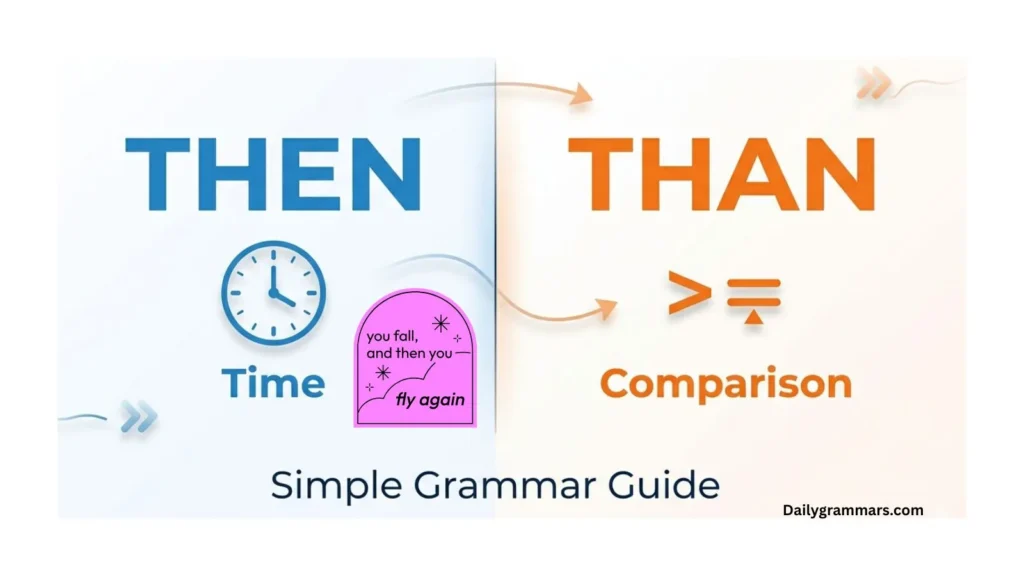
Then is about time.
Than is used for comparison.
Examples:
- I will call you then. (time)
- She is taller than me. (comparison)
Tip:
- Use then when something happens next.
- Use than when you compare two things.
The Origin of Then vs Than
Both words come from Old English, but they had different roles.
- Then comes from “þanne” and relates to time or sequence.
- Than comes from “þan” and is used for comparison.
Over time, spelling changed, but meanings stayed separate. This is why they look similar but are used differently.
British English vs American English Spelling
Good news: There is no difference between British and American English for these words.
| Usage Type | British English | American English | Example |
|---|---|---|---|
| Time | then | then | I ate, then slept |
| Comparison | than | than | Better than before |
Both systems follow the same rule.
Which Spelling Should You Use?
- In the US: Use then for time, than for comparison.
- In the UK/Commonwealth: Same rule applies.
- For global writing: Stick to standard usage. Everyone understands it.
Simple advice:
Follow the rule. Do not guess. Check your sentence.
Common Mistakes with Then vs Than
Mistake 1:
❌ I am smarter then you
✅ I am smarter than you
Mistake 2:
❌ Finish your work than go home
✅ Finish your work then go home
Mistake 3:
❌ She is more faster then him
✅ She is faster than him
Tip: If you can replace it with “next,” use then.
Then vs Than in Everyday Examples
Emails:
- I will send the report, then we can review it.
- This option is better than the last one.
News:
- Prices rose, then fell again.
- This year is hotter than last year.
Social Media:
- First coffee, then work ☕
- This movie is better than I expected!
Formal Writing:
- The results improved then stabilized.
- The new system is more efficient than the old one.
Then vs Than – Google Trends & Usage Data
Search data shows that “then vs than” is a very popular keyword worldwide.
- High searches in the US, UK, India, and Pakistan
- Students and writers search it the most
- Common in grammar help and writing tools
Why? Because it is a basic but tricky mistake. Even native speakers mix it up.
Comparison Table: Then vs Than
| Feature | Then | Than |
|---|---|---|
| Meaning | Time / sequence | Comparison |
| Use | What happens next | Comparing two things |
| Example | Eat, then sleep | Bigger than before |
| Trick | Think “when” | Think “compare” |
FAQs
- When would I use then or than?
Use then for time or sequence; use than when comparing two things. - Do you say “OK then” or “OK than”?
Correct is “OK then” because it refers to what happens next. - How to remember than and then?
Think then = time, than = compare (both have “a” in than and compare). - Do you say better then or better than?
Correct is better than because it’s a comparison. - How can I use then?
Use then to show order or time, like “Finish work, then relax.” - What is the difference between then and than me?
Then relates to time; than me is used when comparing yourself to someone else.
Conclusion
The difference between then vs than is simple but important. One small mistake can change your meaning. Then is used for time or sequence. It tells what happens next. Than is used for comparison. It helps you compare two things clearly.
This confusion happens to many people because the words sound alike. But once you learn the rule, it becomes easy. Always stop and check your sentence. Ask yourself: Am I talking about time or comparing something? That will guide you to the right choice.
Using the correct word improves your writing. It makes your message clear and professional. Whether you are writing emails, posts, or reports, this small fix can make a big difference. Practice a few examples daily, and soon you will use then and than without thinking.