Choosing between “were or was” can be confusing. Both words are past-tense forms of the verb “to be,” but they are not interchangeable. A simple sentence such as “I was tired” seems easy, yet questions become harder when you see sentences like “If I were you” or “I wish she were here.”
People often search for “were or was” because they want to know which word fits a sentence. The confusion usually comes from three areas: singular and plural subjects, the word “you,” and hypothetical situations. Understanding these rules can help you write better emails, essays, social posts, and professional documents.
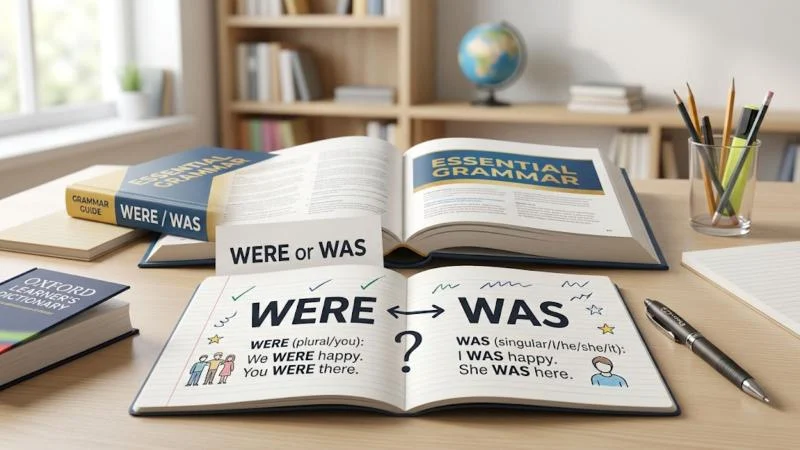
The good news is that the basic rule is simple. Was normally goes with I, he, she, and it, while were goes with you, we, and they. In hypothetical or unreal situations, were can also be used with singular subjects, as in “If I were you.”
Were or Was – Quick Answer
The correct choice depends mainly on the subject and the meaning of the sentence.
Use “was” with:
- I
- He
- She
- It
- Singular nouns
Examples:
- I was tired.
- He was late.
- She was happy.
- It was cold.
- The car was expensive.
Use “were” with:
- You
- We
- They
- Plural nouns
Examples:
- You were right.
- We were ready.
- They were busy.
- The children were outside.
- The books were on the table.
There is one important special rule. Use were for formal hypothetical or unreal situations:
- If I were you, I would apologize.
- If she were here, she could help.
- I wish he were more careful.
So, the easiest rule to remember is:
| Subject or situation | Correct form |
|---|---|
| I | was |
| He | was |
| She | was |
| It | was |
| You | were |
| We | were |
| They | were |
| Hypothetical “if” situation | were |
The Origin of Were or Was
Was and were are not different spellings of the same word. They are different forms of the irregular verb “to be.”
English developed these forms from older Germanic forms of the verb meaning “to be.” Over time, English changed many verb forms, but was and were remained as important past-tense forms.
Today, was is normally used with first-person singular and third-person singular subjects:
- I was
- He was
- She was
- It was
Were is normally used with second-person subjects and plural subjects:
- You were
- We were
- They were
Were also has an important grammatical role in the subjunctive mood. This is why English uses “If I were you” even though “I” normally takes “was.”
It is therefore better to think of was vs. were as a grammar choice, not a spelling choice. Unlike words such as “color” and “colour,” there is no standard British-versus-American spelling difference between “was” and “were.”
British English vs American English Spelling
British English and American English spell was and were exactly the same way.
The basic grammar rules are also very similar. Both varieties use:
- I was
- He was
- She was
- It was
- You were
- We were
- They were
Both varieties also commonly use were in formal hypothetical statements.
| Example | British English | American English |
|---|---|---|
| I was tired. | Correct | Correct |
| She was happy. | Correct | Correct |
| You were late. | Correct | Correct |
| We were ready. | Correct | Correct |
| They were outside. | Correct | Correct |
| If I were you, I would go. | Standard | Standard |
| I wish I were there. | Standard | Standard |
| If I was you, I would go. | Informal | Informal |
The main difference is not spelling. In everyday speech, both British and American speakers may use was in some hypothetical expressions, especially in informal contexts. However, were remains the safer choice for formal writing.
Which Spelling Should You Use?
Strictly speaking, you are choosing between two verb forms, not two spellings.
For US English
American English follows the standard rule:
- I was
- He was
- She was
- You were
- We were
- They were
For formal hypothetical statements, use were:
If I were you, I would wait.
For British and Commonwealth English
The same basic rule applies:
We were at the office yesterday.
She was very tired.
For formal hypothetical situations, were is also the safest choice:
If he were available, he would help us.
For Global English
If your audience is international, use the standard forms. They are widely understood and accepted.
A useful professional rule is:
Use “was” for normal singular past statements and “were” for plural subjects, “you,” and formal hypothetical situations.
This approach makes your writing clear for readers in the United States, United Kingdom, Canada, Australia, and other English-speaking regions.
Common Mistakes with Were or Was
1. “You was” instead of “You were”
Incorrect:
You was very helpful.
Correct:
You were very helpful.
In standard English, you takes were, whether you are speaking to one person or many people.
2. “They was” instead of “They were”
Incorrect:
They was at school.
Correct:
They were at school.
“They” is plural, so it normally takes were.
3. “We was” instead of “We were”
Incorrect:
We was excited.
Correct:
We were excited.
4. “She were” in a normal past statement
Incorrect:
She were tired yesterday.
Correct:
She was tired yesterday.
However, were can be correct in a hypothetical sentence:
If she were tired, she would rest.
5. “I were” in a normal past statement
Incorrect:
I were at home yesterday.
Correct:
I was at home yesterday.
But:
If I were you, I would accept the offer.
Here, were is correct because the sentence expresses a hypothetical situation.
6. Using “did” with was or were
Incorrect:
Did you were there?
Correct:
Were you there?
Also incorrect:
I didn’t was tired.
Correct:
I wasn’t tired.
Questions and negatives with was/were do not normally need “did.”
7. Confusing “there was” and “there were”
Use there was for a singular noun:
There was one problem.
Use there were for a plural noun:
There were several problems.
Were or Was in Everyday Examples
Knowing the rule is useful, but seeing these words in real situations makes the difference easier to remember.
In Emails
I was unable to attend the meeting yesterday.
You were correct about the schedule.
We were pleased with the results.
In News Writing
The company was affected by the delay.
Thousands of people were affected by the storm.
News writing usually follows standard subject-verb agreement.
In Social Media
I was so excited about the concert!
We were laughing all night.
They were amazing!
Informal social media can contain nonstandard grammar, but standard forms are still best when you want your writing to look polished.
In Formal Writing
The research was completed in June.
The participants were asked to complete a survey.
If the proposal were approved, the project would begin immediately.
Formal writing benefits from consistent standard grammar.
In Questions
Use:
Was she at work?
Were they at home?
Were you busy?
Do not use:
Did she was at work?
Did they were at home?
Were or Was – Google Trends & Usage Data
Search interest in “were or was” and related phrases such as “was vs were” is mainly connected to grammar learning, English homework, ESL study, proofreading, and writing assistance.
A useful point about Google Trends is that it measures relative search interest, not the total number of searches. Search interest can also change by country, season, education level, and context.
The topic is especially useful in countries where English is widely learned as a second or additional language. Searches may increase around school assignments, English grammar lessons, exams, and writing tasks.
“Was vs were” also appears frequently in online grammar resources because the two forms are common but follow different subject rules. Grammar references consistently identify was with I/he/she/it and were with you/we/they, with were also used in subjunctive or hypothetical constructions.
Common Search Intent
People searching for these terms often want answers to questions such as:
- Was or were?
- Is it “I was” or “I were”?
- Is it “you was” or “you were”?
- Is it “they was” or “they were”?
- Should I say “if I was” or “if I were”?
- Is it “there was” or “there were”?
For exact current search-volume numbers, Google Trends should be checked for the specific country and date range because interest changes over time.
Were or Was Comparison Table
| Phrase | Correct? | Why |
|---|---|---|
| I was | Yes | “I” takes was |
| I were | Usually no | Only used in special hypothetical/subjunctive contexts |
| He was | Yes | Singular subject |
| She was | Yes | Singular subject |
| It was | Yes | Singular subject |
| You were | Yes | “You” takes were |
| You was | No in standard English | Use were |
| We were | Yes | Plural subject |
| We was | No in standard English | Use were |
| They were | Yes | Plural subject |
| They was | No in standard English | Use were |
| If I were you | Yes | Formal hypothetical |
| If I was there yesterday | Yes | Can describe a real possibility or factual condition |
| There was one | Yes | Singular noun |
| There were many | Yes | Plural noun |
FAQs About Were or Was
1. Is it “I was” or “I were”?
Use I was for a normal past event.
I was at home yesterday.
Use I were only in special hypothetical or subjunctive constructions.
If I were you, I would wait.
2. Is it “you was” or “you were”?
Use you were in standard English.
You were right.
This applies whether “you” refers to one person or several people.
3. Is it “they was” or “they were”?
The standard form is they were.
They were late.
4. Should I say “if I was” or “if I were”?
Use if I were for a hypothetical or contrary-to-fact situation:
If I were you, I would apologize.
Use if I was when referring to a real possibility or past fact:
If I was rude yesterday, I apologize.
The difference depends on meaning.
5. Is “I wish I was” or “I wish I were” correct?
“I wish I were” is the traditional formal choice:
I wish I were there.
“I wish I was there” is also common in everyday informal English.
6. Is it “there was” or “there were”?
Use there was with a singular noun:
There was a problem.
Use there were with a plural noun:
There were three problems.
7. Are “was” and “were” different spellings in British and American English?
No. Both British and American English spell these words the same way.
The difference is grammatical usage, not spelling.
Conclusion
Understanding “were or was” becomes much easier when you focus on the subject and the meaning of the sentence. Use was with I, he, she, and it for normal past statements. Use were with you, we, and they. For example, “I was tired,” “She was happy,” “You were late,” and “They were ready” all follow the standard rule.
The most important exception is the hypothetical or subjunctive use of were. This is why we say, “If I were you” and “I wish I were there.” In formal writing, were is generally the safest choice for these unreal or hypothetical situations.
There is also no British-versus-American spelling difference between these words. Both varieties use was and were in essentially the same basic way.
If you remember one simple pattern, make it this: I/he/she/it = was; you/we/they = were. Then remember the special rule: hypothetical situations often use were. This will help you write clearer emails, essays, articles, social posts, and professional documents.