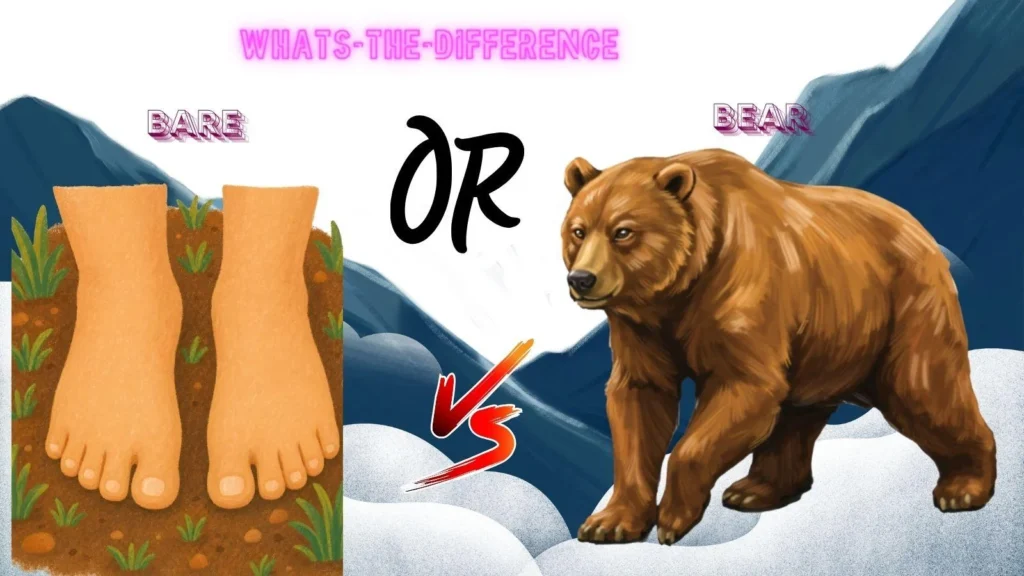
English has many words that sound the same but have completely different meanings. “Bare” and “bear” are two common examples. They sound alike in many accents, but they cannot be used in the same way.
If you have ever wondered whether to write “bare with me” or “bear with me,” you are not alone. This confusion often appears in emails, social media posts, schoolwork, and everyday conversations. A small spelling mistake can change the meaning of a sentence.
The good news is that the difference is simple once you know what each word means. Bare usually means uncovered, empty, or lacking something. Bear can mean an animal, to carry or support something, or to tolerate something.
This guide explains bare or bear in simple terms. You will learn their meanings, origins, common mistakes, correct examples, spelling differences, and practical tips. Whether you are writing a casual message or a formal document, this guide will help you choose the right word with confidence.
RELATED;Stigmatism vs Astigmatism: What’s the Correct Spelling?
Bare or Bear – Quick Answer
Bare and bear are different words with different meanings.
- Bare = uncovered, exposed, empty, or without something.
- Bear = an animal, to carry, to support, or to tolerate something.
Examples
Bare:
- He walked with bare feet.
- The room had bare walls.
- The tree had bare branches.
Bear:
- I saw a bear in the forest.
- Please bear with me.
- She could not bear the pain.
A useful memory trick is:
Bare = uncovered.
Bear = animal or tolerate.
Quick Comparison Table
| Word | Main Meaning | Example |
|---|---|---|
| Bare | Uncovered or exposed | He walked on the beach with bare feet. |
| Bare | Empty or simple | The room had bare walls. |
| Bear | Large animal | The bear walked through the forest. |
| Bear | Tolerate | I cannot bear the noise. |
| Bear | Carry or support | The bridge can bear heavy loads. |
| Bear | Give birth | Some animals bear young. |
The Origin of Bare or Bear
Although bare and bear sound similar, they come from different historical roots.
The Origin of Bare
Bare has Old English roots. It is related to the Old English word bær, meaning naked, uncovered, or without clothing.
Over time, the meaning expanded. Today, bare can describe something exposed, empty, plain, or lacking.
For example:
- bare feet = feet without shoes or socks
- bare walls = walls without decoration
- bare minimum = the smallest amount needed
- bare hands = without gloves or protection
The Origin of Bear
The word bear has several historical uses. The noun referring to the animal comes from an old Germanic word related to terms in other Germanic languages.
The verb bear has a different history. It comes from an Old English verb meaning to carry, support, or endure.
This explains why bear has several meanings today:
- to carry a load
- to support something
- to tolerate something
- to produce or give birth
- a large animal
The spelling difference is therefore not simply a modern spelling choice. The words have different histories and meanings.
British English vs American English Spelling
There is no major British-versus-American spelling difference between bare and bear.
Both British English and American English use:
- bare
- bear
The meanings also remain essentially the same.
| Meaning | British English | American English |
|---|---|---|
| Without covering | bare | bare |
| Animal | bear | bear |
| Tolerate | bear | bear |
| Carry/support | bear | bear |
| Minimum amount | bare minimum | bare minimum |
| “Please be patient” | bear with me | bear with me |
Important Point
Do not change bear to bare simply because you are writing for a British or American audience.
For example:
❌ Bare with me.
✅ Bear with me.
The correct phrase is “bear with me” in both British and American English.
Which Spelling Should You Use?
Your audience does not normally determine whether you should use bare or bear. The meaning of the sentence does.
For US English
Use bare when you mean uncovered or lacking something.
She walked across the floor with bare feet.
Use bear when you mean tolerate, carry, or the animal.
Please bear with me while I check the information.
For UK and Commonwealth English
The same basic rule applies.
The walls were bare.
I cannot bear the noise.
For Global English
If you write for an international audience, focus on the meaning rather than pronunciation.
When you mean uncovered, use bare.
When you mean tolerate, carry, support, or the animal, use bear.
Common Mistakes with Bare or Bear
Because these words sound alike, they are often confused in writing.
1. “Bare with me”
❌ Bare with me while I check.
✅ Bear with me while I check.
Bear with me means “please be patient with me.”
2. “Bear feet”
❌ He walked in bear feet.
✅ He walked in bare feet.
Here, bare means uncovered.
3. “Bare the burden”
❌ She had to bare the burden.
✅ She had to bear the burden.
Here, bear means carry or endure.
4. “Bear walls”
❌ The house had bear walls.
✅ The house had bare walls.
The walls were plain or undecorated.
5. “Bare the pain”
❌ I cannot bare the pain.
✅ I cannot bear the pain.
Here, bear means tolerate or endure.
Easy Rule
Ask yourself:
Does the sentence mean “uncovered” or “without something”?
Use bare.
Does it mean “animal,” “carry,” “support,” or “tolerate”?
Use bear.
Bare or Bear in Everyday Examples
Knowing the difference becomes easier when you see the words in normal situations.
In Emails
Correct:
Please bear with me while I review your request.
Incorrect:
Please bare with me while I review your request.
This is one of the most common mistakes in professional emails.
In News Writing
A news report might say:
The investigation revealed the bare facts of the case.
Or:
A bear was spotted near the town.
The meaning makes the correct spelling clear.
On Social Media
Someone might write:
I cannot bear this heat!
Or:
The room looked bare after we removed the furniture.
In Formal Writing
You might see:
The company must bear the cost of repairs.
Or:
The report provides only the bare minimum of information.
More Examples
| Sentence | Correct Word | Why? |
|---|---|---|
| Please ___ with me. | bear | Be patient |
| He walked in ___ feet. | bare | Uncovered |
| I cannot ___ the noise. | bear | Tolerate |
| The walls were ___. | bare | Undecorated |
| We saw a ___ in the woods. | bear | Animal |
| She had to ___ the cost. | bear | Carry/pay a burden |
| He gave the ___ facts. | bare | Basic or minimal |
| The tree had ___ branches. | bare | Without leaves |
Bare or Bear – Google Trends & Usage Data
Searches for “bare or bear” are usually driven by spelling confusion rather than by a difference between British and American English.
People commonly search for the pair when they encounter phrases such as:
- bear with me
- bare feet
- bear the cost
- bare minimum
- bear the pain
The two words are also individually common because they have several meanings.
Bear appears frequently in writing about animals, business, finance, physical burdens, emotions, and patience. Bare commonly appears in descriptions involving clothing, decoration, amounts, exposure, and simplicity.
Search interest can vary by country and over time. Google Trends data also depends on the exact search term, location, date range, and search category selected. Therefore, a general comparison of the two words should not be treated as a precise measure of everyday language use.
For writers, the more useful lesson is simple: search popularity does not determine the correct spelling. Meaning does.
Bare or Bear: Side-by-Side Comparison
| Feature | Bare | Bear |
|---|---|---|
| Pronunciation | Usually sounds like “bear” | Usually sounds like “bare” |
| Main idea | Uncovered or lacking | Carry, tolerate, or animal |
| Noun | Rarely used as a noun | A large animal |
| Verb | To uncover/expose | To carry, endure, support |
| Adjective | Uncovered, empty, plain | Not normally an adjective |
| Example | bare feet | bear the pain |
| Common phrase | bare minimum | bear with me |
| Common mistake | “bear feet” | “bare with me” |
FAQs About Bare or Bear
1. Is it “bare with me” or “bear with me”?
The correct phrase is “bear with me.”
It means please be patient with me.
Please bear with me while I find the document.
2. Is it bare feet or bear feet?
The correct phrase is “bare feet.”
Bare means uncovered.
She walked across the sand with bare feet.
3. What does “bear with me” mean?
Bear with me means to be patient while someone does something or solves a problem.
Bear with me while I check your account.
4. What does bare mean?
Bare can mean uncovered, exposed, empty, plain, or lacking something.
The room had bare walls.
5. What does bear mean?
Bear can refer to a large animal. As a verb, it can mean to carry, support, endure, tolerate, or produce.
I cannot bear the noise.
6. Is “bare minimum” correct?
Yes. Bare minimum is the correct phrase.
It means the smallest amount that is necessary or acceptable.
He did the bare minimum required for the project.
7. Are bare and bear pronounced the same?
In many varieties of English, bare and bear are pronounced the same or very similarly. They are therefore homophones for many speakers.
Their meanings and spellings are different.
Conclusion
Understanding bare or bear is easier when you focus on meaning rather than sound. The two words may sound the same, but they perform different jobs in a sentence.
Use bare when you mean uncovered, exposed, plain, empty, or lacking something. You can have bare feet, bare walls, or the bare minimum.
Use bear when you mean the animal, to carry, to support, or to tolerate. You can bear a burden, bear a cost, or bear with someone. The phrase “bear with me” is especially important because “bare with me” is a common spelling mistake.
British English and American English use the same spellings for these words. There is no regional spelling rule that changes bare into bear or vice versa.
When you are unsure, ask what the sentence means. If it involves something uncovered, choose bare. If it involves carrying, enduring, patience, or the animal, choose bear. This simple rule will help you use both words correctly in everyday and professional writing.