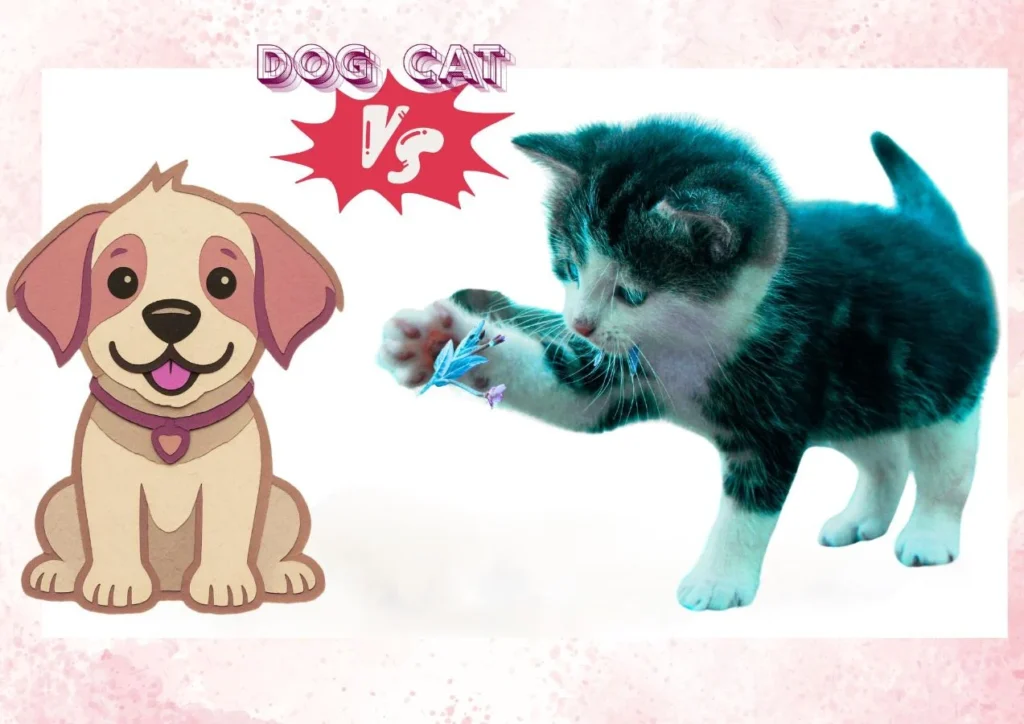
Choosing between a dog or cat is a common question for people who want a pet but are unsure which animal fits their lifestyle. Dogs and cats can both make wonderful companions, but they have different needs, habits, and personalities.
People often search for “dog or cat” when comparing pets for a home, family, child, apartment, or busy lifestyle. The choice is not simply about which animal is cuter. It depends on time, space, money, activity level, and the kind of relationship you want with your pet.
Dogs are usually more social and need regular exercise, training, and attention. Cats are often more independent and can be easier to care for in smaller homes. However, every animal is different. Some dogs are calm, while some cats are very social and playful.
This guide explains the difference between a dog or cat, compares their care needs, and helps you decide which pet may be the better choice for your lifestyle.
Dog or Cat – Quick Answer
If you want an active, social companion that enjoys walks, training, and outdoor activities, a dog may be the better choice.
If you want a more independent pet that generally needs less direct supervision and can adapt well to indoor living, a cat may be a better choice.
| Feature | Dog | Cat |
|---|---|---|
| Social interaction | Usually high | Usually moderate |
| Exercise needs | Often high | Usually lower |
| Training | Often requires regular training | Usually less training |
| Outdoor walks | Usually needed | Usually not needed |
| Independence | Lower | Higher |
| Space needed | Often more | Often less |
| Grooming | Depends on breed | Depends on breed |
| Best for active owners | Yes | Sometimes |
| Apartment living | Depends on breed | Often suitable |
Example:
- “I have lots of free time and love walking.” → A dog may suit you.
- “I work long hours and want a more independent pet.” → A cat may suit you.
There is no universal winner. The best choice depends on your lifestyle.
The Origin of Dog or Cat
The words dog and cat are both very old English words.
The word dog has an unusual history. Its exact origin is uncertain. Old English commonly used the word hund, which is related to the modern word hound. The word dog later became widely used in English and eventually replaced hound as the general word for the animal.
The word cat also has a long history. It is related to similar words in several European languages, including Latin cattus. Over time, related forms developed across different languages and entered English.
Unlike spelling questions such as “color or colour,” dog or cat is not a British-versus-American spelling issue. They are two different animal names.
So, you should not choose between “dog” and “cat” based on English spelling rules. You choose the word based on the animal you mean.
British English vs American English Spelling
There is no major British English versus American English spelling difference between dog and cat.
Both forms are spelled the same in standard English:
- British English: dog
- American English: dog
- British English: cat
- American English: cat
Comparison Table
| Meaning | British English | American English |
|---|---|---|
| Canine pet | Dog | Dog |
| Feline pet | Cat | Cat |
| Young dog | Puppy | Puppy |
| Young cat | Kitten | Kitten |
| Male dog | Male dog | Male dog |
| Female dog | Female dog | Female dog |
| Male cat | Tom / male cat | Tom / male cat |
| Female cat | Queen / female cat | Queen / female cat |
The important point is that dog and cat are not alternative spellings. They identify different animals.
Which Spelling Should You Use?
You should use dog when you mean a canine and cat when you mean a feline.
This rule is the same for American, British, Canadian, Australian, and other standard forms of English.
For US English
Use:
“I have a dog.”
or:
“My cat is sleeping.”
For UK and Commonwealth English
Use the same forms:
“She takes her dog for a walk.”
“The cat is sitting on the sofa.”
For Global English
Use dog and cat because they are simple, standard, and widely understood.
If you are writing professionally, avoid treating the words as interchangeable. Saying “The cat went for a walk” when you mean a dog changes the meaning of the sentence.
Common Mistakes with Dog or Cat
Because dog and cat are simple words, most mistakes involve meaning rather than spelling.
Mistake 1: Treating them as synonyms
Incorrect:
“A dog or cat is the same type of animal.”
Correction:
“A dog and a cat are different types of animals.”
Mistake 2: Using the wrong animal word
Incorrect:
“My cat loves going for walks with me.”
This is possible, but if you are talking about a typical pet dog, the intended word may be dog.
Better:
“My dog loves going for walks with me.”
Mistake 3: Confusing plural forms
Correct:
- one dog
- two dogs
- one cat
- two cats
The standard plural is formed by adding -s.
Mistake 4: Confusing young animals
A young dog is a puppy.
A young cat is a kitten.
Dog or Cat in Everyday Examples
The phrase dog or cat appears in many everyday situations.
In Emails
“Could you let me know whether the apartment allows a dog or cat?”
This is useful when asking about pet policies.
In News
“The family was asked to choose between keeping the dog or cat.”
News writing may use the terms when discussing pets, animal welfare, or community issues.
On Social Media
“Are you a dog or cat person?”
This is a common informal question asking about someone’s preference.
In Formal Writing
“Before adopting a dog or cat, prospective owners should consider the animal’s care requirements.”
This style works well in reports, articles, and educational content.
In Everyday Conversation
“Would you rather have a dog or cat?”
This simply asks which type of pet someone prefers.
Dog or Cat – Google Trends & Usage Data
Search interest for dog and cat varies by country, season, and context. Both are extremely common English words, so searches can cover many different subjects.
People may search dog for:
- dog breeds
- dog training
- dog food
- dog behavior
- veterinary care
- adoption
People may search cat for:
- cat breeds
- cat behavior
- cat food
- kitten care
- adoption
- veterinary care
Searches for “dog or cat” are more specific. They often relate to pet ownership, personality comparisons, quizzes, family decisions, and lifestyle choices.
Because search interest changes over time and depends heavily on the exact search term, Google Trends should be checked for a specific country and date range rather than assuming one animal is always more popular.
Dog or Cat: Key Differences
| Category | Dog | Cat |
|---|---|---|
| Animal type | Canine | Feline |
| Typical personality | Often social and interactive | Often independent |
| Exercise | Usually needs regular exercise | Usually exercises indoors |
| Training | Often important | Usually less structured |
| Human attention | Often needs more | Can be more independent |
| Walking | Usually required | Usually unnecessary |
| Living space | Depends strongly on breed | Often adapts to smaller spaces |
| Companionship | Often highly interactive | Can be affectionate but independent |
| Maintenance | Varies by breed | Varies by breed |
| Common young-animal term | Puppy | Kitten |
Dog or Cat: Which Is Better for Families?
Both can be good family pets.
A dog may be a strong choice for families that enjoy outdoor activities and have enough time for walks, training, and daily interaction.
A cat may work well for families that prefer a quieter pet and want an animal that can spend more time independently.
Children should always be taught how to treat animals safely and respectfully. The animal’s individual temperament also matters more than a simple dog-versus-cat rule.
Dog or Cat: Which Is Better for Apartments?
A cat is often easier to accommodate in a small apartment because it does not normally require outdoor walks.
However, some dogs can also live happily in apartments. Breed, age, energy level, exercise, and access to outdoor areas all matter.
A large, energetic dog may need much more daily exercise than a calm adult dog.
Dog or Cat: Which Is Easier to Care For?
Neither animal is completely maintenance-free.
Dogs commonly require:
- regular walks
- training
- feeding
- grooming
- veterinary care
- social interaction
Cats commonly require:
- feeding
- litter-box care
- grooming when needed
- play and enrichment
- veterinary care
- a safe indoor environment
A cat may be easier for some busy households, but every pet still needs responsible care.
FAQs About Dog or Cat
1. Is a dog better than a cat?
Not necessarily. A dog may be better for an active person who wants an interactive companion, while a cat may suit someone who prefers a more independent pet.
2. Is a cat easier than a dog?
Cats are often easier to manage in some areas because they do not normally need outdoor walks. However, they still require food, healthcare, enrichment, and responsible care.
3. Which is more affectionate, a dog or cat?
This depends on the individual animal. Many dogs are highly social, but many cats are also very affectionate.
4. Which is better for children?
Both dogs and cats can be good companions for children. The animal’s temperament, the child’s age, and adult supervision are important factors.
5. Which is better for an apartment?
Cats often adapt well to apartments, but some dogs can also thrive in apartments if they receive enough exercise and attention.
6. Are dog and cat alternative spellings?
No. Dog and cat are different words for different animals. They are not British and American spelling variants.
7. Should I choose a dog or cat?
Consider your available time, living space, activity level, budget, and preferred type of companionship. Choose the animal whose needs you can consistently meet.
Conclusion
The choice between a dog or cat is not really about finding one animal that is better for everyone. It is about finding the animal that fits your lifestyle.
Dogs are often energetic, social, and highly interactive. They can be excellent companions for people who enjoy walks, outdoor activities, training, and regular interaction. Cats are often more independent and can be a good option for people who prefer a quieter pet or have limited space.
There is also no British-versus-American spelling difference here. Dog always means a canine, while cat means a feline. Both words have the same spelling in British and American English.
Before choosing a pet, consider your time, home, finances, activity level, and ability to provide long-term care. Most importantly, remember that individual animals have different personalities. A calm dog may be a better fit than an energetic cat for one person, while the opposite may be true for someone else.