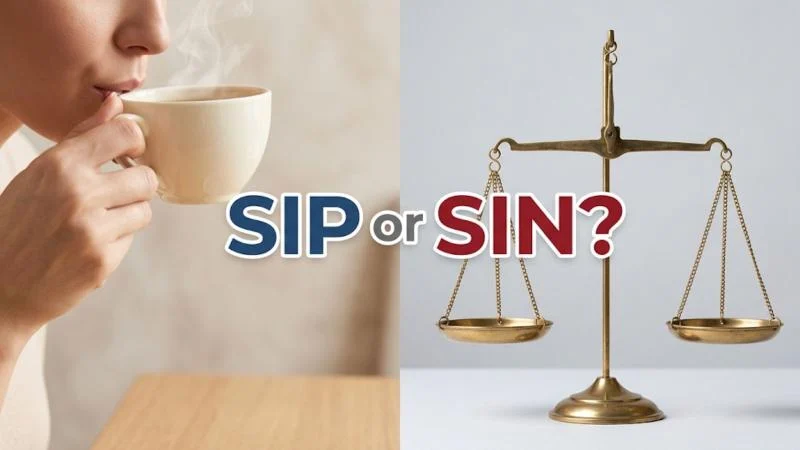
A single letter can completely change the meaning of a word. “Sip” and “sin” look and sound similar, but they have very different meanings. This is why people often search for “sip or sin” when writing, reading, texting, or checking a sentence.
Sip is a verb or noun connected with drinking. If you take a small amount of a drink, you sip it. For example, “She took a sip of tea.” The word can also describe drinking slowly in small amounts.
Sin, on the other hand, is usually a noun or verb connected with wrongdoing, especially in a religious or moral sense. For example, “Lying is considered a sin in many religions.”
The confusion usually comes from pronunciation, spelling mistakes, or typing errors. The two words differ by only one letter, but their meanings are not related. Knowing the difference helps you choose the right word in emails, schoolwork, social media posts, and formal writing.
This guide explains sip or sin, their meanings, origins, spelling, common mistakes, and everyday usage so you can use each word correctly.
Sip or Sin – Quick Answer
Sip means to drink a small amount of something, usually slowly.
Sin means an immoral or wrongful act, especially one considered wrong according to religious beliefs.
Examples
- Sip: “Take a sip of water.”
- Sip: “He sipped his coffee while reading.”
- Sin: “He believed that lying was a sin.”
- Sin: “The story describes the seven deadly sins.”
Quick comparison
| Word | Meaning | Example |
|---|---|---|
| Sip | A small amount of liquid or to drink slowly | “She took a sip of juice.” |
| Sin | A wrongful or immoral act | “He asked for forgiveness for his sin.” |
Easy tip: If you are talking about drinking, use sip. If you are talking about wrongdoing or morality, use sin.
The Origin of Sip or Sin
The words sip and sin have different histories.
Sip has roots in Old English and related Germanic languages. It developed from words connected with drinking small amounts. Over time, it became the modern English word sip, meaning to drink slowly or take a small quantity of liquid.
The word sin is much older in English. It comes from Old English synn, which referred to wrongdoing or an offense against religious or moral rules. Similar forms appear in other Germanic languages.
The spelling difference exists because these are completely separate words. They are not two spellings of the same word.
Their similarity is mainly visual and phonetic. Both are short words beginning with s and containing a short vowel sound. A small spelling mistake can therefore change one word into the other.
For example:
- “He took a sip of water.” ✓
- “He took a sin of water.” ✗
The first sentence describes drinking. The second does not make sense.
British English vs American English Spelling
There is no British-versus-American spelling difference between sip and sin.
Both British English and American English use:
- sip
- sipped
- sipping
- sin
- sinned
- sinning
The spelling remains the same in both major varieties of English.
| Meaning | British English | American English |
|---|---|---|
| Drink a small amount | sip | sip |
| Past tense of sip | sipped | sipped |
| Continuous form | sipping | sipping |
| Wrongdoing | sin | sin |
| Past tense of sin | sinned | sinned |
| Continuous form | sinning | sinning |
This is different from words such as colour/color or centre/center, where British and American spelling can differ.
With sip or sin, the issue is not regional spelling. It is a difference in meaning.
Which Spelling Should You Use?
Use sip when you mean drinking a small amount of a liquid.
Examples:
- “Please take a sip.”
- “I took a sip of coffee.”
- “She was sipping lemonade.”
Use sin when you mean an immoral or wrongful action.
Examples:
- “He confessed his sin.”
- “The character committed a serious sin.”
- “The book discusses sin and forgiveness.”
For US English users
Use sip for drinking and sin for wrongdoing. The same spelling rules apply in American English.
For UK and Commonwealth English users
The rules are exactly the same. British English does not use a different spelling for either word.
For global English users
Choose the word based on its meaning rather than your country.
A useful memory trick is:
Sip = small drink.
Sin = wrongdoing.
Common Mistakes with Sip or Sin
Because the words are short and similar, they can be confused in typing and informal writing.
Mistake 1: Using “sin” for drinking
Incorrect:
“I took a sin of water.”
Correct:
“I took a sip of water.”
Mistake 2: Using “sip” for wrongdoing
Incorrect:
“Lying is a sip.”
Correct:
“Lying is a sin.”
Mistake 3: Confusing “sipped” and “sinned”
These past-tense forms have different meanings.
- Sipped: “She sipped her tea.”
- Sinned: “He sinned and later apologized.”
Mistake 4: Confusing “sipping” and “sinning”
- Sipping means drinking slowly.
- Sinning means committing sins.
For example:
“They were sipping coffee.”
But:
“They were accused of sinning.”
Mistake 5: Treating them as spelling variations
Sip and sin are not alternative spellings. They are different words with different meanings.
Sip or Sin in Everyday Examples
Knowing the difference becomes easier when you see the words in real situations.
In emails
Sip:
“I will take a quick sip of coffee before the meeting.”
Sin:
“The discussion focused on the concept of sin and forgiveness.”
In news writing
Sip:
“The actor was photographed sipping coffee at a local café.”
Sin:
“The article explores how different religions define sin.”
On social media
Sip:
“Just enjoying a quiet sip of coffee this morning.”
Sin:
“Everyone makes mistakes, but admitting a sin can be the first step toward forgiveness.”
In formal writing
Sip:
“Participants were encouraged to take small sips of water.”
Sin:
“The text examines the relationship between sin, morality, and forgiveness.”
In everyday conversation
- “Can I have a sip?”
- “That was my last sip.”
- “He believes the action was a sin.”
- “The story is about sin and redemption.”
Sip or Sin – Google Trends & Usage Data
Search interest for sip and sin can vary greatly depending on context.
Sip appears in searches about drinks, coffee, tea, cocktails, hydration, drinking habits, and food-related content. It is also common in phrases such as “take a sip,” “small sip,” and “sip coffee.”
Sin appears in searches involving religion, morality, literature, philosophy, entertainment, and phrases such as “original sin” and “seven deadly sins.”
Because the words belong to very different topics, comparing their raw search popularity does not necessarily tell you which word is “correct.” Search volume can also change by country and by current events or cultural trends.
In English-speaking countries, both words are established vocabulary. The important point is that sip is associated with drinking, while sin is associated with wrongdoing or religious morality.
Google Trends data should therefore be interpreted by search phrase and context, rather than assuming that one word replaces the other.
Sip vs Sin: Comparison Table
| Feature | Sip | Sin |
|---|---|---|
| Part of speech | Verb and noun | Noun and verb |
| Main meaning | Drink a small amount | Commit or refer to wrongdoing |
| Related topic | Drinks and drinking | Morality and religion |
| Example noun | “A sip of tea” | “A serious sin” |
| Example verb | “She sipped her coffee.” | “He sinned.” |
| Past tense | Sipped | Sinned |
| -ing form | Sipping | Sinning |
| British spelling | Sip | Sin |
| American spelling | Sip | Sin |
| Alternative spelling | None | None |
FAQs About Sip or Sin
1. What is the difference between sip and sin?
Sip relates to drinking a small amount of liquid. Sin refers to wrongdoing, especially in a religious or moral context.
2. Is “sip” related to drinking?
Yes. Sip means to drink a small amount at a time or refers to a small amount of liquid.
3. What does “sin” mean?
Sin usually means an immoral or wrongful action. In religious contexts, it can mean an act that violates divine or religious law.
4. Is “sip or sin” a British English difference?
No. British and American English spell both words the same way. The difference is meaning, not regional spelling.
5. What is the past tense of sip?
The past tense is sipped.
Example: “She sipped her tea.”
6. What is the past tense of sin?
The past tense is sinned.
Example: “He believed he had sinned.”
7. How can I remember sip vs sin?
Think of sip as a small drink. Think of sin as a wrong action.
Conclusion
The difference between sip or sin is simple once you focus on meaning. Sip is connected to drinking. It can be a verb meaning to drink slowly or a noun meaning a small amount of liquid. For example, “She took a sip of water.”
Sin has a completely different meaning. It usually refers to an immoral or wrongful action, especially in religious contexts. For example, “He believed that lying was a sin.”
There is no British English versus American English spelling difference here. Both varieties use sip and sin in the same way. The forms also change differently: sipped and sipping come from sip, while sinned and sinning come from sin.
If you are unsure which word to use, look at the sentence. If it involves drinking, choose sip. If it involves wrongdoing, morality, or religion, choose sin.
Once you remember this simple distinction, you can avoid this common spelling mistake in everyday, academic, professional, and online writing.