Language can be tricky when one word has two accepted spellings. “Signalling or signaling” is a common spelling question because both forms are correct, but they are used in different varieties of English.
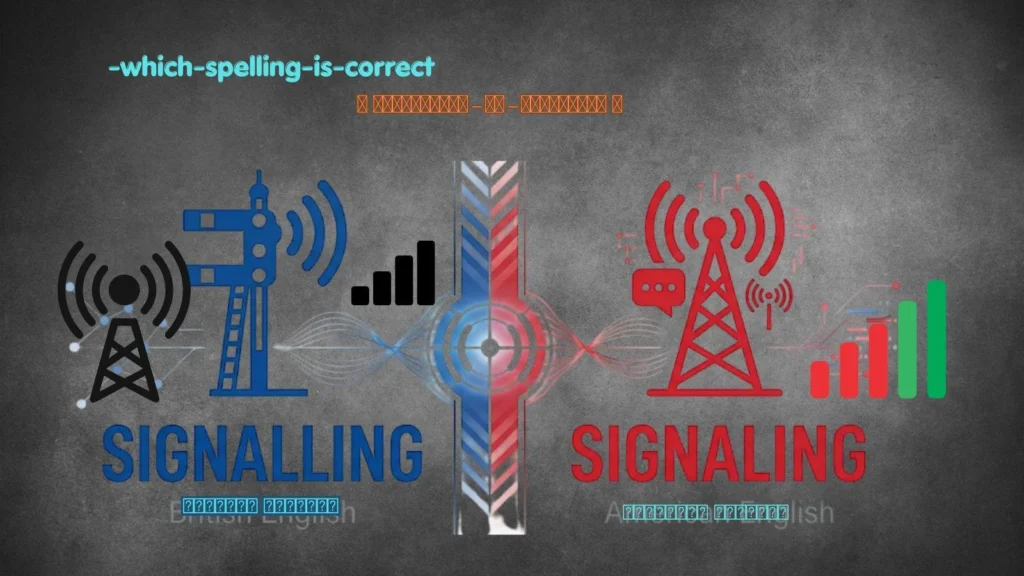
The difference comes from a simple spelling rule. Signalling is the standard British English spelling, while signaling is the standard American English spelling. Both words come from the verb signal, meaning to give a sign, message, or indication.
People often search for “signalling or signaling” when writing emails, reports, academic papers, websites, or professional documents. Choosing the right form can make your writing look more consistent and natural to your readers.
The good news is that you do not need to memorize two different meanings. The words have the same meaning and pronunciation. The only difference is the spelling convention used by the variety of English you are following.
This guide explains the difference, gives clear examples, covers British and American spelling rules, and helps you choose the right form for your audience.
Signalling or Signaling – Quick Answer
Signalling and signaling are both correct.
- Signalling = British English spelling
- Signaling = American English spelling
Both mean giving or sending a signal.
Examples
British English:
The device is signalling a warning.
American English:
The device is signaling a warning.
Another example:
- British: The driver was signalling before turning.
- American: The driver was signaling before turning.
There is no difference in meaning. The main difference is the spelling of the final consonant before -ing.
| Spelling | English variety | Example |
|---|---|---|
| Signalling | British English | The system is signalling an error. |
| Signaling | American English | The system is signaling an error. |
The Origin of Signalling or Signaling
The word signal comes from the Latin signum, meaning “mark,” “sign,” or “token.” It entered English through French and developed into the modern word signal.
The verb signal means to communicate something through a sign, gesture, sound, or other indication.
The spelling difference appeared because British and American English developed different spelling conventions.
When adding -ing to some verbs ending in a consonant preceded by a single vowel, British English often doubles the final consonant, while American English may keep it single.
This creates:
- signal → signalling in British English
- signal → signaling in American English
The same pattern can be seen in other words:
- travelling / traveling
- cancelling / canceling
- modelling / modeling
- labelled / labeled
However, spelling rules can vary depending on the word. Therefore, it is best to learn common forms rather than assume that every verb follows exactly the same pattern.
British English vs American English Spelling
The key difference is regional spelling convention.
In British English, signalling is normally preferred.
In American English, signaling is normally preferred.
Comparison Table
| Feature | British English | American English |
|---|---|---|
| Present participle | signalling | signaling |
| Base verb | signal | signal |
| Meaning | Giving a signal | Giving a signal |
| Pronunciation | Same | Same |
| Past participle | signalled | signaled |
| Common usage | UK, Ireland, many Commonwealth contexts | United States |
More Examples
| British English | American English |
|---|---|
| signalling | signaling |
| signalled | signaled |
| travelling | traveling |
| cancelling | canceling |
| modelling | modeling |
| labelled | labeled |
For formal writing, the important thing is consistency. If you are using British English throughout a document, use signalling. If you are using American English, use signaling.
Which Spelling Should You Use?
Your audience should guide your choice.
Use “signalling” for British English
Choose signalling if your readers primarily use British English.
This includes writing for audiences in places such as:
- The United Kingdom
- Ireland
- Australia
- New Zealand
- Many Commonwealth contexts
For example:
The railway system is signalling a fault.
Use “signaling” for American English
Choose signaling when following American English conventions.
For example:
The railway system is signaling a fault.
American spelling is especially appropriate for:
- US publications
- American businesses
- US academic work
- American websites
- Documents following an American style guide
What about global English?
For an international audience, either spelling can work. The best approach is to choose one English variety and use it consistently.
If your website follows British English, use signalling. If it follows American English, use signaling.
Common Mistakes with Signalling or Signaling
Several mistakes can occur when writers are unsure which form to use.
Mistake 1: Treating one spelling as incorrect
Both signalling and signaling are standard spellings.
Incorrect assumption:
Signalling is always wrong.
Better:
Signalling is standard in British English.
Mistake 2: Mixing spelling styles
A document may use signalling in one section and signaling in another.
This is not normally a grammar error, but it can make the writing look inconsistent.
Better: Choose one spelling system and maintain it throughout the document.
Mistake 3: Using “signaling” in British-style writing
If your document follows British English, signaling may look inconsistent with other British spellings such as travelling and cancelled.
Better:
The equipment is signalling a warning.
Mistake 4: Assuming pronunciation changes
The pronunciation does not normally change simply because the spelling changes.
Signalling and signaling have the same basic pronunciation and meaning.
Signalling or Signaling in Everyday Examples
Both spellings appear in everyday communication.
In Emails
British English:
The monitoring system is signalling a possible problem.
American English:
The monitoring system is signaling a possible problem.
In News Writing
British English:
The latest figures are signalling a change in demand.
American English:
The latest figures are signaling a change in demand.
On Social Media
A British user might write:
The signs are signalling that something is changing.
An American user might write:
The signs are signaling that something is changing.
In Formal Writing
British English:
The results are signalling a need for further research.
American English:
The results are signaling a need for further research.
The meaning remains the same in every example.
Signalling or Signaling – Google Trends & Usage Data
Search interest for “signalling or signaling” reflects the broader difference between British and American English.
Generally, signalling is more associated with British English-speaking regions, while signaling is more associated with the United States.
Usage can also depend on the subject. For example, signalling is common in British railway terminology, telecommunications, biology, economics, and general writing. Signaling appears in the corresponding American contexts.
Google Trends can help show regional search interest, but search data should not be treated as a complete measure of language use. Search volume can be affected by population, internet behavior, education, industry, and the wording people choose when searching.
For SEO, the most useful approach is to consider your target country and audience rather than simply choosing the spelling with more global searches.
Signalling vs Signaling: Side-by-Side Comparison
| Word | Meaning | British English | American English |
|---|---|---|---|
| signal | Give a sign or indication | signal | signal |
| signalling/signaling | Giving a signal | signalling | signaling |
| signalled/signaled | Gave a signal | signalled | signaled |
| signaler/signaller | Person or device giving a signal | signaller is common | signaler is common |
The main spelling difference is the doubled l.
FAQs About Signalling or Signaling
1. Is “signalling” correct?
Yes. Signalling is the standard British English spelling.
2. Is “signaling” correct?
Yes. Signaling is the standard American English spelling.
3. Is signalling or signaling more common?
It depends on the English variety. Signalling is associated with British English, while signaling is associated with American English.
4. Do signalling and signaling have different meanings?
No. They have the same meaning. The difference is spelling.
5. Which spelling should I use in the UK?
Use signalling for standard British English.
6. Which spelling should I use in the USA?
Use signaling for standard American English.
7. Is “signalling” used in Australia?
Yes. Australian English generally follows British-based spelling conventions, so signalling is commonly used.
8. Should I use signalling or signaling for SEO?
Use the spelling that matches your target audience. A UK-focused website should generally use signalling, while a US-focused website should generally use signaling.
Conclusion
The choice between signalling or signaling is simple once you know the regional spelling rule. Signalling is the standard British English form, while signaling is the standard American English form. Both words have the same meaning, pronunciation, and grammatical function.
If you are writing for readers in the UK or following British English conventions, choose signalling. If you are writing for a US audience or following American English conventions, choose signaling.
For international websites and professional documents, either form can be appropriate. The most important point is to stay consistent with the English variety used throughout your writing. Avoid switching between British and American spelling without a reason.
So, neither spelling is universally “wrong.” The correct choice depends on your audience and style guide. Remember the simple rule: signalling for British English, signaling for American English. Once you follow that distinction, you can use the word confidently in emails, reports, academic writing, news content, and everyday communication.