Many writers get confused about dialog or dialogue because both words look correct. You may see dialog in software menus and dialogue in books, articles, and school writing. This spelling difference often makes people wonder which version is right.
The good news is simple: both spellings are correct, but they are used in different ways. In most everyday English, dialogue is the standard spelling. It means a conversation between two or more people.
|See also Affect vs Effect
Meanwhile, dialog is more common in technology, computer programming, and American English shorthand.People search for dialog or dialogue to avoid spelling mistakes in emails, essays, business writing, and online content. Choosing the wrong spelling can make writing look unprofessional or confusing.
This guide explains the difference in clear language. You will learn the meaning, history, spelling rules, examples, and the best version to use for your audience.
Dialog or Dialogue – Quick Answer
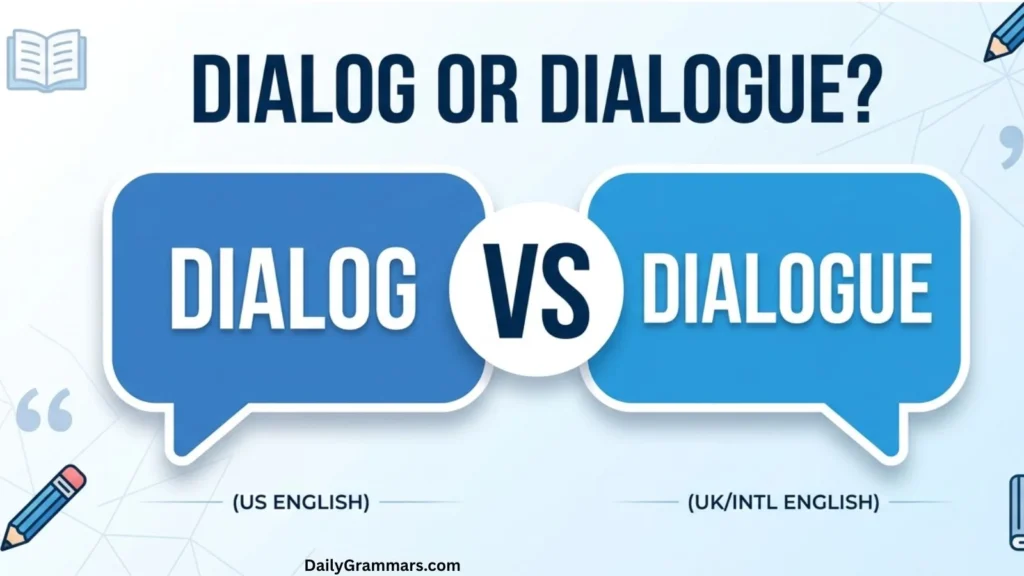
Dialogue is the standard spelling in British English and most formal writing.
Dialog is mainly used in American English and technology-related contexts.
Examples:
- Correct formal writing: “The movie had excellent dialogue.”
- Software example: “Click the dialog box to continue.”
Quick Comparison
| Word | Common Use | Region |
|---|---|---|
| Dialogue | Conversations, writing, literature | UK & Global English |
| Dialog | Computer terms, software | US English |
The Origin of Dialog or Dialogue
The word comes from the Greek word dialogos, meaning “conversation.” It later moved into Latin and French before entering English.
Originally, English writers used dialogue because of French influence. Over time, American English started shortening some words. This created the shorter spelling dialog.
The same thing happened with words like:
- Catalog vs Catalogue
- Analog vs Analogue
Today, dialogue remains the older and more traditional form, while dialog became popular in technical writing and software development.
British English vs American English Spelling
British English usually keeps longer spellings ending in -ogue. American English often prefers shorter forms ending in -og.
Examples
| British English | American English |
|---|---|
| Dialogue | Dialog |
| Catalogue | Catalog |
| Analogue | Analog |
Usage Difference
| Context | Preferred Spelling |
|---|---|
| Books and literature | Dialogue |
| Academic writing | Dialogue |
| Software design | Dialog |
| Computer programming | Dialog |
| UK English | Dialogue |
| US English | Both, but dialog appears in tech |
In modern writing, dialogue is still more common worldwide.
Which Spelling Should You Use?
The best spelling depends on your audience and writing style.
Use “Dialogue” When:
- Writing essays
- Creating blog posts
- Publishing books
- Sending professional emails
- Writing for UK or global readers
Use “Dialog” When:
- Writing software documentation
- Discussing computer interfaces
- Following American tech style guides
Simple Advice
If you are unsure, use dialogue. It is safer for most readers and formal writing.
Common Mistakes with Dialog or Dialogue
Writers often mix the spellings or use the wrong word for the situation.
Common Errors
| Incorrect Usage | Correct Usage |
|---|---|
| “The app opened a dialogue box.” | “The app opened a dialog box.” |
| “Their dialog in the novel was realistic.” | “Their dialogue in the novel was realistic.” |
| “Dialogues box” | “Dialog box” or “Dialogue box” depending on style |
Helpful Tip
- Use dialogue for conversations.
- Use dialog for software and technology.
Dialog or Dialogue in Everyday Examples
Here are simple examples from daily life.
Emails
- “The manager encouraged open dialogue among employees.”
News Articles
- “The leaders started a peaceful dialogue.”
Social Media
- “Healthy dialogue helps people understand each other.”
Formal Writing
- “The novel’s dialogue felt natural and emotional.”
Technology Writing
- “A pop-up dialog appeared on the screen.”
Dialog or Dialogue – Google Trends & Usage Data
Search trends show that dialogue is far more popular worldwide. Countries using British English strongly prefer dialogue.
Popular by Region
| Country | Preferred Spelling |
|---|---|
| United Kingdom | Dialogue |
| Canada | Dialogue |
| Australia | Dialogue |
| United States | Dialogue in general writing, Dialog in tech |
| India | Dialogue |
Usage Context
| Context | Most Common Form |
|---|---|
| Literature | Dialogue |
| Journalism | Dialogue |
| Education | Dialogue |
| Software Development | Dialog |
| UI Design | Dialog |
Even in the United States, dialogue remains more common outside technical fields.
Comparison Table: Dialog vs Dialogue
| Feature | Dialog | Dialogue |
|---|---|---|
| Meaning | Conversation or software box | Conversation |
| Style | Shortened form | Traditional form |
| Common Region | American English | British & Global English |
| Formal Writing | Rare | Preferred |
| Technology Use | Common | Less common |
| Literature Use | Rare | Standard |
FAQs:
Is dialog the same as dialogue?
Yes, both words mean a conversation between people, but “dialogue” is the more common spelling.
Which is correct, dialogue or dialog?
Both are correct, but “dialogue” is preferred in general English writing and literature.
Is dialog British or American?
“Dialog” is mainly used in American English, especially in technology and software terms.
What is the meaning of dialog?
“Dialog” means a conversation or discussion between two or more people.
Why is it called dialog?
The word comes from the Greek term meaning “conversation” or “speaking through words.
” What is a better word for dialogue?
Depending on context, alternatives include conversation, discussion, chat, exchange, or communication.
Conclusion
The confusion between dialog or dialogue comes from differences in spelling style and usage. While both words are correct, they are not always interchangeable. Dialogue is the standard spelling for conversations, literature, education, journalism, and professional writing. It is widely accepted in British English and global English.
On the other hand, dialog appears mostly in American technology and software-related writing. Programmers, designers, and software companies often use the shorter form for menus, interface labels, and technical documents.
If your goal is safe, professional, and widely understood writing, choose dialogue. It works best for essays, blog posts, emails, and business communication. Use dialog only when writing about software or following a technical style guide.
Understanding the difference helps improve clarity and avoids spelling mistakes. By choosing the correct version for your audience, your writing will look cleaner, smarter, and more professional.