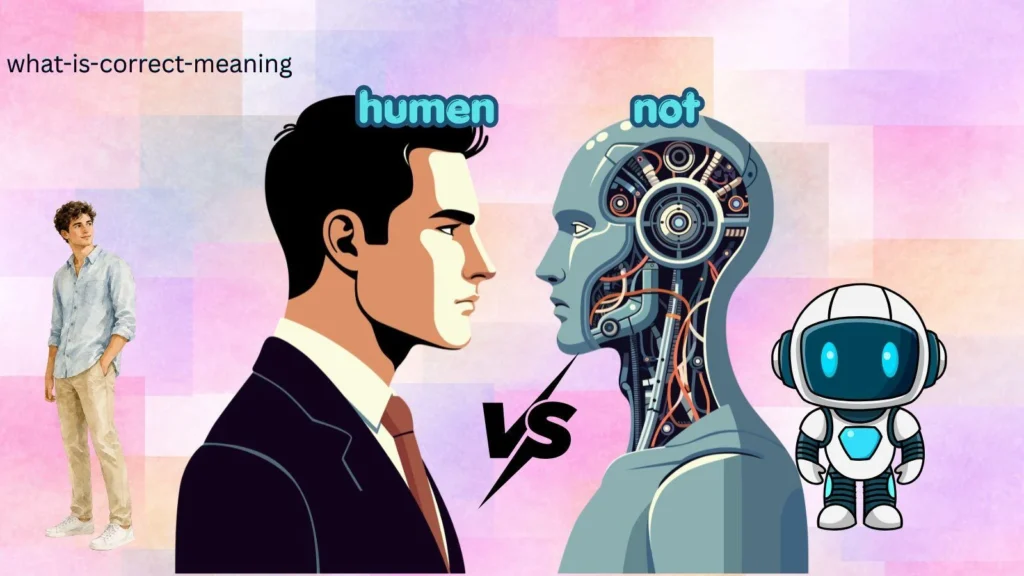
If you have typed “humen or not” into a search box, you are probably wondering whether humen is a correct English word. The short answer is no—not in standard English when you mean more than one person. The correct word is humans.
This confusion is easy to understand. English has several irregular plurals, such as man → men and woman → women, so it may seem logical that human → humen. However, English does not work that way here. Human is a regular noun, so its plural is formed by adding -s: humans.
There is another possible meaning behind “humen or not.” Some people may actually mean “human or not,” especially when talking about artificial intelligence, bots, or whether someone online is a real person. In that phrase, human is the correct spelling.
This guide explains the difference between humen, human, humans, and human or not, with simple examples and practical advice for everyday and professional writing.
Humen or Not – Quick Answer
Human is the correct spelling for one person or as an adjective.
Humans is the correct plural form when referring to two or more people.
Humen is not the standard English plural of human. It is generally a spelling mistake.
| Word or phrase | Correct? | Meaning |
|---|---|---|
| human | ✅ Yes | One person or something relating to people |
| humans | ✅ Yes | More than one human |
| human being | ✅ Yes | One person |
| human beings | ✅ Yes | More than one person |
| humen | ❌ No | Common misspelling of humans |
| human or not | ✅ Yes | Asking whether something is human |
| Human or Not | ✅ Yes | Can also refer to an AI/social Turing-test context |
Examples
- Correct: Humans need water to survive.
- Correct: She is a human being.
- Correct: Is this account human or not?
- Incorrect: Humen need water to survive.
- Incorrect: There were many humen in the room.
The key point is simple:
human → humans
Not:
human → humen
The Origin of Humen or Not
The word human has a long history. Modern English human developed through French from Latin hūmānus, meaning “of man” or “human.” The spelling human became predominant in English by the early 18th century.
The spelling humen is usually created by analogy with irregular English plurals.
For example:
- man → men
- woman → women
- human → humans
A learner may see man → men and assume that human → humen should follow the same pattern. But human is a separate word and takes the regular plural ending -s.
This is a useful reminder that English plural forms cannot always be predicted from how another word looks.
The phrase “human or not” is different. Here, human is not being pluralized. The phrase simply asks whether something is human.
For example:
Is the writer human or not?
Here, human describes one person.
In modern online discussions, “Human or Not” can also refer to an AI-focused social Turing-test game in which users try to determine whether they are chatting with a person or an AI.
British English vs American English Spelling
There is no British-versus-American spelling difference between human and humans.
Both British English and American English use:
- human
- humans
- human being
- human beings
The spelling remains the same.
Other words around human can sometimes have regional differences. For example:
- American English: human behavior
- British English: human behaviour
But the word human itself does not change.
| Meaning | American English | British English |
|---|---|---|
| One person | human | human |
| More than one person | humans | humans |
| One person, formal phrase | human being | human being |
| More than one | human beings | human beings |
| Related to people | human | human |
| Incorrect plural | humen ❌ | humen ❌ |
Examples
American English:
Human behavior can be difficult to predict.
British English:
Human behaviour can be difficult to predict.
Notice that human stays exactly the same.
Which Spelling Should You Use?
Use human when referring to one person or when using the word as an adjective.
Use humans when referring to multiple people.
For US English
Use:
Humans have developed advanced technology.
For UK English
Use:
Humans have developed advanced technology.
The spelling is identical.
For Commonwealth English
Countries that commonly use British English conventions also use human and humans.
For global English
If you write for an international audience, human and humans are the safest standard forms.
Avoid humen in:
- School assignments
- University papers
- Business emails
- Websites
- Reports
- Articles
- Professional documents
- News writing
Unless Humen is being used as a proper name, fictional term, brand name, or other intentional special usage, use human or humans instead.
Common Mistakes with Humen or Not
1. Using “humen” as the plural
❌ Humen are social animals.
✅ Humans are social animals.
The plural of human is humans.
2. Confusing “human” with “humans”
❌ Many human lives were affected.
This sentence is not necessarily wrong because human can work as an adjective.
But:
✅ Many humans were affected.
When human is functioning as the noun referring to people, the plural form is humans.
3. Copying the pattern of “man → men”
Incorrect reasoning:
man → men, so human → humen
Correct:
man → men
human → humans
These words have different plural patterns.
4. Writing “humen being”
❌ Every humen being deserves respect.
✅ Every human being deserves respect.
The standard expression is human being.
5. Using “humen” in formal writing
Even if readers understand what you mean, humen can look like a spelling error.
Use:
humans
instead.
Humen or Not in Everyday Examples
In Emails
Incorrect:
We should remember that all humen make mistakes.
Correct:
We should remember that all humans make mistakes.
In News Writing
A news article might say:
Scientists continue to study how humans interact with artificial intelligence.
This uses humans correctly as a plural noun.
On Social Media
You may see:
Is this account human or not?
Here, human or not means “Is this a real human, or is it something else?”
Another example:
I can’t tell if I’m talking to a human or not.
This is grammatically correct.
In Formal Writing
Researchers are examining how humans respond to increasingly advanced artificial intelligence systems.
Here, humans refers to people in general.
In Casual Conversation
Is that human or not?
This could refer to a person, robot, AI system, image, video, or another unusual situation.
Humen or Not – Google Trends & Usage Data
Search interest around “humen or not” can represent more than one search intent.
Some users are likely looking for a spelling answer because they are unsure whether humen or humans is correct. Search results consistently treat humans as the standard plural form.
Another group may actually be searching for “human or not.” That phrase has a separate meaning, especially in discussions about AI and online identity. Human or Not can also refer to an AI-related social Turing-test game.
Google Trends data should be interpreted carefully here. A very uncommon misspelling such as humen can have too little search volume for meaningful country-by-country comparisons. Google Trends also reports relative interest, not absolute numbers of searches.
For SEO purposes, the search intent can be understood like this:
| Search query | Likely intent | Useful answer |
|---|---|---|
| humen | Spelling | Use human/humans |
| humen or humans | Grammar | Humans is the plural |
| human or humans | Singular vs plural | Both are correct in different contexts |
| human or not | Meaning | Asking whether something is human |
| Human or Not | AI-related search | May refer to the social Turing-test game |
For an SEO article, it is therefore useful to cover both the spelling mistake and the “human or not” phrase without treating them as the same expression.
Humen vs Human vs Humans: Comparison Table
| Variation | Standard English? | Correct use | Example |
|---|---|---|---|
| human | ✅ | Singular noun/adjective | He is human. |
| humans | ✅ | Plural noun | Humans communicate in many ways. |
| human being | ✅ | Singular noun phrase | Every human being needs oxygen. |
| human beings | ✅ | Plural noun phrase | Human beings live in societies. |
| humen | ❌ | Usually a misspelling | Avoid it in standard writing. |
| human or not | ✅ | Question or phrase | Is the account human or not? |
| Human or Not | ✅ | Possible proper title/name | It can refer to an AI-related game. |
FAQs About Humen or Not
1. Is “humen” a correct English word?
No, humen is not the standard plural of human. In ordinary English writing, use humans.
2. Is it “human” or “humen”?
Use human for one person or as an adjective. Use humans for more than one person. Humen is generally a spelling error.
3. What is the plural of human?
Seealso;213+Silk vs Lace: Ultimate Guide You Must Read
The standard plural is humans.
Example:
Humans have language and culture.
4. Why isn’t the plural of human “humen”?
Because human takes the regular English plural ending -s. It does not follow the irregular pattern of man → men.
5. Is “human or not” grammatically correct?
Yes. Human or not is a valid phrase when you are asking whether something is human.
Example:
I cannot tell whether the account is human or not.
6. Is “humen” ever used intentionally?
It can appear as a fictional, humorous, invented, or specialized term. Some informal online sources use it jokingly as a supposed plural of human. However, that does not make it the standard English plural.
7. Should I use “humen” in professional writing?
No. For professional, academic, business, or formal writing, use human or humans, depending on the sentence.
Conclusion
The answer to “humen or not” is simple: if you are asking whether humen is the standard plural of human, the correct form is humans.
Use human for one person or as an adjective:
She is human.
Use humans for more than one person:
Humans live in communities.
The spelling humen usually results from confusion with irregular plurals such as man → men. However, human follows the regular plural rule and takes -s. The spelling is the same in both British and American English.
There is also an important distinction between humen and human or not. The latter is a normal phrase used to ask whether something is human. In modern technology discussions, it may also relate to attempts to distinguish people from AI systems.
For schoolwork, business communication, websites, articles, and other professional writing, stick with the standard forms human, humans, and human being. That choice is clear, correct, and understood by English speakers worldwide.