Have you ever typed judgement and seen a red spell-check line appear? Or maybe you wrote judgment and wondered if it looked incomplete. Many English learners and writers search for “judgement or judgment” because both spellings appear online, in books, and even in legal documents.
The confusion comes from differences between British English and American English. In some places, judgement is common. In others, judgment is the standard spelling. This can make writing emails, essays, business reports, or social media posts difficult.
|See also Wich or Which
The good news is simple: both spellings are correct in certain contexts. However, one version is more widely accepted worldwide. Knowing when to use each spelling helps your writing look professional and natural.
In this guide, you will learn the quick answer, the history behind both spellings, differences between British and American English, common mistakes, and real-life examples. You will also see comparison tables, FAQs, and usage advice so you can choose the correct spelling with confidence.
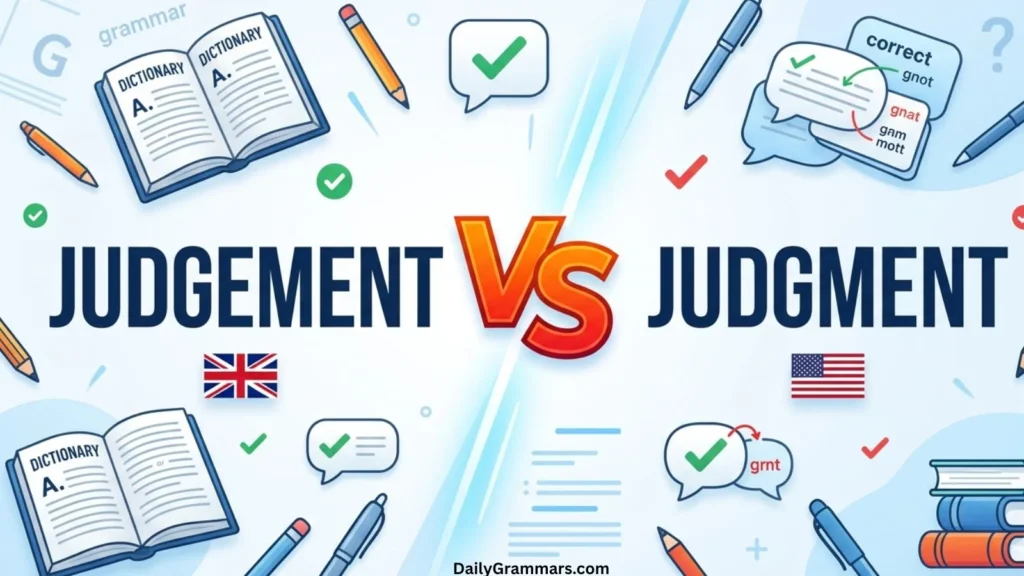
Judgement or Judgment – Quick Answer
Both “judgement” and “judgment” are correct.
- Judgment is the preferred spelling in American English.
- Judgement is more common in British English.
Examples
| Spelling | Example Sentence | Common Region |
|---|---|---|
| Judgment | The judge made a fair judgment. | United States |
| Judgement | Her judgement was correct. | United Kingdom |
Simple Rule
- Writing for an American audience? Use judgment.
- Writing for a British audience? Either can work, but judgement is often preferred in general writing.
The Origin of Judgement or Judgment
The word comes from the Old French word jugement and the Latin word judicare, meaning “to judge.”
In Middle English, writers used many spelling forms because English spelling was not fixed. Over time, two spellings became common:
- Judgment
- Judgement
The shorter form, judgment, became standard in legal and official American English. British English kept both forms alive, especially judgement in non-legal writing.
This is why modern English still shows two accepted spellings today.
British English vs American English Spelling
The biggest difference between these spellings comes from regional writing styles.
American English
In the United States, judgment is the standard spelling in nearly all situations.
British English
In British English:
- Judgement is common in everyday writing.
- Judgment is often used in legal contexts.
Comparison Table
| Feature | Judgment | Judgement |
|---|---|---|
| American English | Standard | Rare |
| British English | Accepted | Common |
| Legal Writing | Very common | Less common |
| Academic Writing | Preferred in US | Seen in UK |
| Spell-check Acceptance | Accepted globally | Mostly UK-based |
Example Sentences
- US English: “The court issued its judgment.”
- UK English: “Her judgement was excellent.”
Which Spelling Should You Use?
The correct choice depends on your audience.
Use “Judgment” If:
- You write for Americans.
- You create business or academic content.
- You want the most globally accepted spelling.
- You work in legal writing.
Use “Judgement” If:
- You write mainly for British readers.
- Your company follows UK spelling rules.
- You use Commonwealth English styles.
Best Global Choice
If you are unsure, judgment is usually the safest option because it is more widely accepted internationally.
Common Mistakes with Judgement or Judgment
Many writers make small mistakes when using these words.
1. Mixing Both Spellings
❌ The manager showed good judgement in the first paragraph and good judgment later.
✅ Pick one spelling style and stay consistent.
2. Using the Wrong Regional Style
❌ Using judgement in a formal American business report.
✅ Use judgment for US audiences.
3. Assuming One Is Incorrect
❌ Saying judgement is always wrong.
✅ Both spellings are correct depending on region and context.
4. Confusing the Meaning
Some people think the words have different meanings. They do not. Both mean:
- an opinion,
- a decision,
- or the ability to decide wisely.
Judgement or Judgment in Everyday Examples
Here is how the word appears in daily writing.
Emails
- “Thank you for your judgment on this matter.”
- “I trust your judgement.”
News Writing
- “The court delivered its judgment yesterday.”
- “Experts questioned the government’s judgement.”
Social Media
- “Trust your judgment.”
- “Her judgement saved the project.”
Formal Writing
- “Good judgment is important in leadership.”
- “The committee used careful judgement.”
Judgement or Judgment – Google Trends & Usage Data
Search and usage patterns show clear regional differences.
Where “Judgment” Is More Popular
- United States
- Canada
- International business writing
- Legal documents
Where “Judgement” Is More Popular
- United Kingdom
- Australia
- New Zealand
- Some Commonwealth countries
Online Trends
- Judgment appears more often worldwide.
- Judgement still has strong use in British publications.
Usage Comparison Table
| Country | Preferred Spelling |
|---|---|
| United States | Judgment |
| United Kingdom | Judgement |
| Canada | Judgment |
| Australia | Judgement |
| Global Business English | Judgment |
Judgement or Judgment Comparison Table
| Word | Correct? | Main Usage Area | Notes |
|---|---|---|---|
| Judgment | Yes | American English | Most common globally |
| Judgement | Yes | British English | Common in UK writing |
FAQs:
Is “judgment” correct?
Yes. It is the standard American English spelling.
Is “judgement” wrong?
No. It is a correct British English spelling.
Which spelling is more common worldwide?
“Judgment” is more common globally.
Which spelling should students use?
Students should follow their school’s style guide:
- US schools → judgment
- UK schools → judgement or judgment
Do the words have different meanings?
No. Both words mean the same thing.
Why do spell-checkers reject “judgement”?
Many spell-check tools use American English by default.
Which spelling is used in legal writing?
Most legal systems prefer “judgment,” even in some British legal contexts.
Conclusion
The debate over “judgement or judgment” is mainly about regional spelling differences, not correctness. Both forms are accepted English words, and both carry the same meaning. The main difference is where and how they are used.
In American English, judgment is the standard spelling and appears in schools, business writing, news articles, and legal documents.
In British English, judgement is more common in everyday writing, although judgment also appears in legal use. This explains why people often see both versions online and become unsure which one to choose.
The best approach is consistency. If you write for American readers or a global audience, judgment is usually the safest choice. If your audience is mainly British or Commonwealth-based, judgement may feel more natural.
Understanding these spelling differences helps you write clearly and professionally. Whether you choose judgment or judgement, using the correct style for your audience will improve trust, readability, and communication.