English has many words that sound alike but have very different meanings. “Threw” and “through” are two common examples. They sound similar, especially in fast speech, but they cannot be used in the same way.
If you have ever wondered whether to write “threw or through”, you are not alone. This confusion often appears in school assignments, emails, text messages, social media posts, and everyday writing. The good news is that the difference is simple once you connect each word to its meaning.
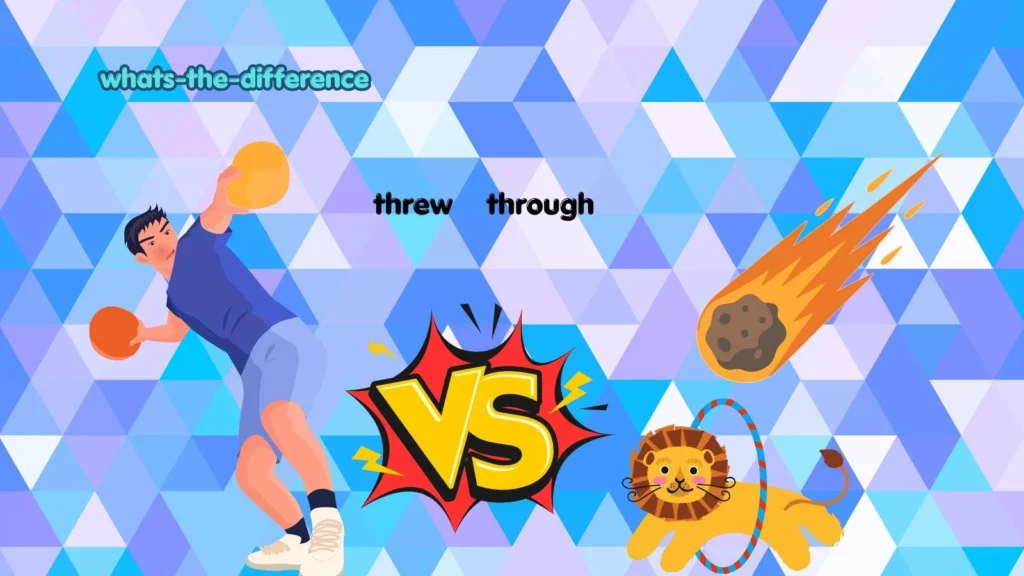
Threw is the past tense of throw. It describes an action where someone sent, tossed, or moved something through the air.
Through is usually a preposition or adverb. It can describe movement from one side to another, movement inside something, completion of a process, or a period of time.
For example:
- She threws the ball.
- She walked through the door.
This guide explains threw or through, their origins, correct usage, common mistakes, spelling, everyday examples, and practical tips to help you choose the right word every time.
Threw or Through – Quick Answer
The quick answer is:
- Through = movement from one side to another, movement within something, or completion of something. = past tense of throw.
Examples of “threw”
- Tom threws the ball.
- She threws the paper in the trash.
- He threws a stone into the lake.
- The player threws the ball across the field.
Examples of “through”
- We walked through the park.
- The train went through the tunnel.
- I read through the report.
- She worked through the night.
A simple memory trick is:
Threw = throw in the past.
Through = going from one side to another or completing something.
The Origin of Threw or Through
Although threw and through look and sound similar, they come from different historical word families.
Where “threw” comes from
Threw is the past tense of throw.
The verb throw has Old English roots. Its historical forms developed over time into the modern forms throw, threw, and thrown.
Today:
- Present: throw
- Past: threw
- Past participle: thrown
For example:
- I throw the ball.
- Yesterday, I threw the ball.
- I have thrown the ball before.
Where “through” comes from
Through also has Old English roots. It developed from older words meaning from one side to another or across.
Its meaning expanded over time. Today, it can describe physical movement:
We walked through the forest.
It can also describe completing a process:
We are through with the project.
The two words therefore look similar mainly because English spelling and pronunciation have changed over many centuries.
British English vs American English Spelling
There is no major British-American spelling difference between threw and through.
Both British English and American English use:
- threw
- through
The difference is based on meaning, not regional spelling.
| Word | British English | American English | Meaning |
|---|---|---|---|
| Threw | threw | threw | Past tense of throw |
| Through | through | through | Across, inside, during, or to completion |
| Throw | throw | throw | Present/base form |
| Thrown | thrown | thrown | Past participle of throw |
Examples in both varieties
British English:
She threw the ball through the window.
American English:
She threw the ball through the window.
The spelling stays the same.
Related informal spelling: “thru”
You may sometimes see thru, especially in informal writing, signs, business names, or abbreviated expressions.
For example:
Drive thru
However, through is the standard spelling for formal writing.
Use through in essays, reports, professional emails, and academic writing.
Which Spelling Should You Use?
The correct choice depends on what you mean, not where you live.
Use “threw” when talking about throwing something
Use threw when describing an action that happened in the past.
He threw the ball.
Sarah threw the letter away.
The child threw the toy.
Use “through” for movement or completion
Use through when something moves from one side to another or passes within something.
We drove through the city.
The dog ran through the gate.
It can also describe completing or experiencing something:
She went through a difficult time.
We worked through the problem.
Advice for global English users
For international or professional writing, remember the meaning rather than trying to choose a regional spelling.
Threw and through are standard in both American and British English.
Common Mistakes with Threw or Through
These words are often confused because they can sound similar.
Mistake 1: Using “through” for a past throwing action
Incorrect:
He through the ball.
Correct:
He threw the ball.
Why? Because threw is the past tense of throw.
Mistake 2: Using “threw” for movement across something
Incorrect:
We walked threw the tunnel.
Correct:
We walked through the tunnel.
The sentence describes movement inside and from one side of the tunnel to another.
Mistake 3: Confusing “threw” with “thrown”
Incorrect:
He has threw the ball.
Correct:
He has thrown the ball.
After has, have, or had, use thrown, not threw.
Compare:
- He threw the ball.
- He has thrown the ball.
- He had thrown the ball.
Mistake 4: Using “through” when “throw” is intended
Incorrect:
I will through the ball.
Correct:
I will throw the ball.
The future or base form is throw, not threw or through.
Threw or Through in Everyday Examples
Understanding real examples makes the difference easier to remember.
In emails
I threw the old documents away.
I looked through the documents before sending them.
In news writing
The player threw the ball toward the goal.
The vehicle traveled through the city during the morning.
On social media
I threw my old shoes away today.
We walked through the market all afternoon.
In formal writing
The researcher threw the sample into the container.
The study examined the issue through several different methods.
In everyday conversation
He threw the keys on the table.
She walked through the front door.
These examples show why context matters. Threw describes an action involving throwing, while through usually describes passage, movement, or completion.
Threw vs Through: Comparison Table
| Feature | Threw | Through |
|---|---|---|
| Part of speech | Verb | Preposition, adverb, adjective, etc. |
| Basic meaning | Past action of throwing | Across, within, during, or completed |
| Present form | Throw | Through has no related verb form |
| Past form | Threw | Not applicable |
| Past participle | Thrown | Not applicable |
| Example | He threw the ball. | He walked through the door. |
| Main clue | Someone sent something by throwing | Something passes across/within something |
Easy comparison
She threw the ball through the window.
This sentence contains both words.
- Threw tells us what she did with the ball.
- Through tells us where the ball traveled.
That makes this sentence an excellent way to remember the difference.
Threw or Through – Google Trends & Usage Data
Search interest for “threw or through” usually comes from people trying to solve a spelling or grammar question. These searches are different from searches for the individual words.
The words themselves are extremely common in English. Threw appears frequently in conversations and writing about past actions, sports, games, and physical movement. Through has a much wider range of uses, so it appears across many types of English writing.
Search interest can also vary by country and context because English is used differently around the world. Learners, students, writers, and native speakers may all search for these words when checking grammar or spelling.
Google Trends data should be interpreted carefully. Search popularity does not directly measure how often a word is correctly used in written English. It measures search activity for particular terms and time periods.
For a quick usage check, look at the surrounding sentence:
- If the sentence means “past tense of throw,” choose threw.
- If it means “across,” “inside,” “during,” or “from one side to another,” choose through.
Threw or Through: A Simple Memory Trick
Try this three-word connection:
Throw → Threw → Thrown
These are forms of the same verb.
I throw the ball.
I threw the ball yesterday.
I have thrown the ball.
Now remember:
Through = movement or passage
We walked through the door.
If you can replace the word with throw in the sentence, you probably need threw when talking about the past.
FAQs About Threw or Through
1. Is “threw” the past tense of “throw”?
Yes. Threw is the simple past tense of throw.
He threw the ball.
2. What is the difference between “threw” and “through”?
Threw means performed the action of throwing in the past. Through usually means across, within, during, or from one side to another.
3. Is “through” a verb?
Seealso;211+Cooling Tower vs Chiller: Simple Guide Explained
Usually, through is used as a preposition or adverb. It can also have other grammatical roles in certain contexts, but it is not the past tense of throw.
4. Is “threw” the same as “thrown”?
No. Threw is the simple past tense.
She threw the ball.
Thrown is the past participle.
She has thrown the ball.
5. Is “thru” correct spelling?
Thru is an informal or abbreviated form of through. It may appear in signs, labels, or informal contexts. Through is the safer choice for formal and standard writing.
6. Which is correct: “walked threw the door” or “walked through the door”?
The correct sentence is:
She walked through the door.
Here, through describes movement from one side of the door to the other.
7. Which is correct: “he through the ball” or “he threw the ball”?
The correct sentence is:
He threw the ball.
Threw is the past tense of throw.
Conclusion
Knowing the difference between threw or through is easy once you focus on meaning. These words may sound similar, but they perform very different jobs in a sentence.
Use threw when you are talking about the past form of throw. For example, “She threw the ball.” The related verb forms are throw, threw, thrown.
Use through when you mean movement across or inside something, a period of time, or completion of a process. For example, “We walked through the park” or “He worked through the night.”
There is no important British-versus-American spelling difference here. Both varieties use threw and through in the same way.
When you are unsure, ask yourself one simple question: Am I talking about the past action of throwing? If yes, use threw. If you are describing passage, movement, duration, or completion, use through.
With this simple rule, you can avoid one of the most common English word-choice mistakes.